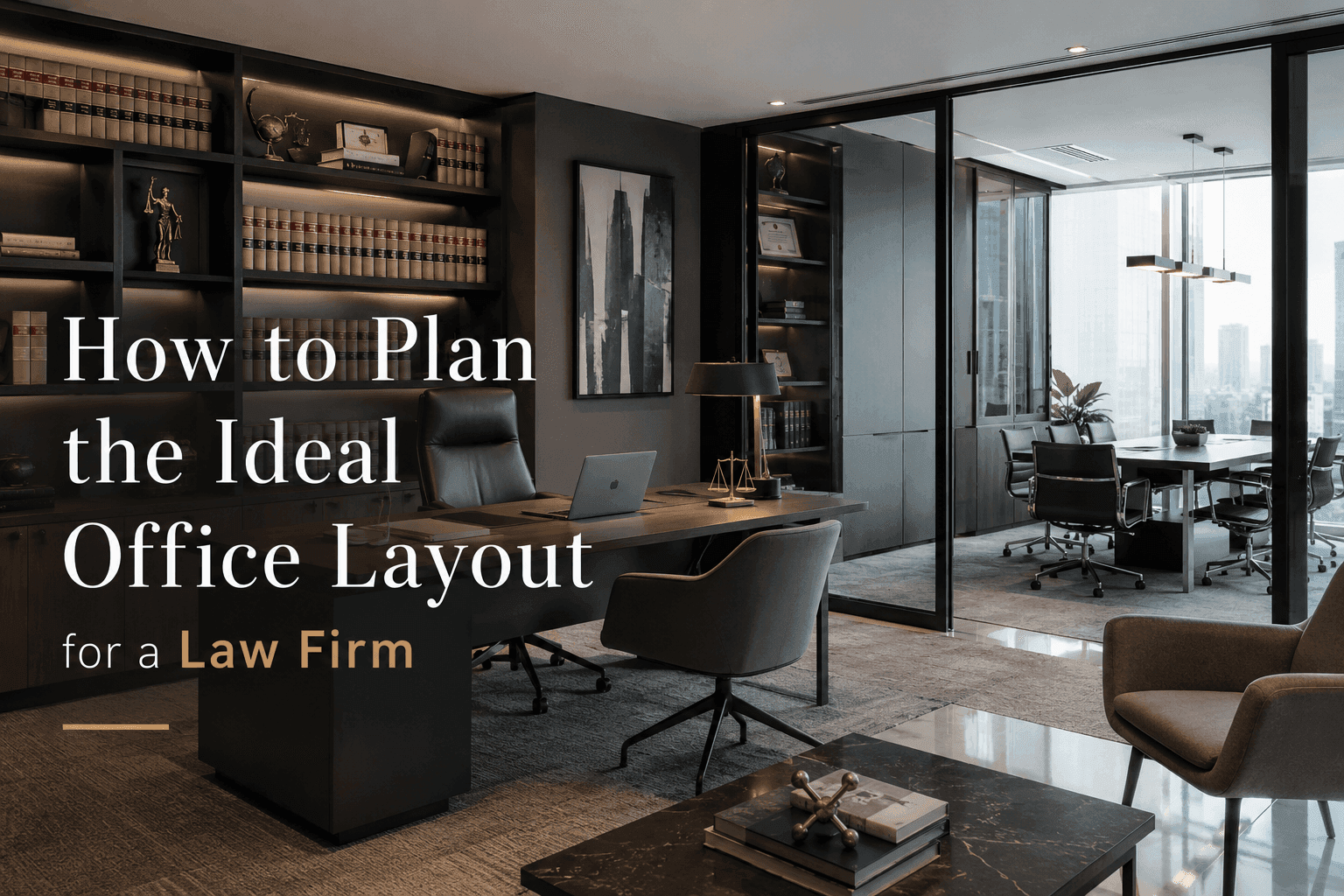
Designing an office for a law firm requires more than just arranging desks and furniture. A well-planned layout should reflect professionalism, confidentiality, and efficiency while creating a comfortable environment for lawyers, staff, and clients.
Below are key principles for planning the ideal law firm office layout.
The reception area is the first point of contact for clients and visitors. It should convey professionalism, trust, and prestige.
Important design elements include:
A well-designed reception area helps establish credibility and sets the tone for the firm's reputation.
Most lawyers require private offices due to the confidential nature of legal work.
Key considerations:
Private offices should provide a quiet environment for focused work, client meetings, and phone calls.
Meeting rooms are essential spaces where lawyers interact with clients, discuss cases, and conduct negotiations.
Best practices include:
These rooms should feel comfortable yet professional to build trust with clients.
Paralegals, assistants, and administrative staff often work in shared workspaces.
Design recommendations:
A well-designed staff area improves productivity and communication within the firm.
Law firms handle highly sensitive documents, so storage areas must be secure and organized.
Important features include:
Proper document management ensures confidentiality and regulatory compliance.
Modern law firms increasingly include informal spaces where lawyers and staff can relax or have informal discussions.
These areas may include:
Such spaces help reduce stress and encourage creative thinking.
A well-designed layout ensures smooth movement throughout the office.
Good space planning should consider:
Efficient circulation helps improve daily workflow and office productivity.
Designing the right layout for a law firm requires careful planning to balance professionalism, confidentiality, and functionality. By creating a thoughtful combination of private offices, meeting spaces, and collaborative areas, law firms can improve both productivity and client experience.
An experienced interior design company can help plan and design a workspace that reflects the firm's identity while supporting its operational needs.